
Choosing new flooring is exciting, but it can also feel overwhelming. There are dozens of materials, styles, colors, and price points to consider, and what works beautifully in one home may not be the right choice for another.
For DFW homeowners, there is another factor that matters: where you live.
The Dallas–Fort Worth area has hot summers, changing humidity, expansive clay soil, and many homes built on concrete slab foundations. These conditions can affect how flooring performs over time. That is why choosing flooring in Dallas should be about more than finding a style you like. You also need to consider durability, moisture, maintenance, installation, and the specific needs of your home.
How to Choose the Right Flooring for Your DFW Home
Start by thinking about how you actually use each room.
A busy living room with kids and pets needs different flooring than a quiet bedroom. A bathroom needs excellent moisture resistance, while a formal dining room may place more emphasis on appearance.
Before choosing a material, consider:
- How much foot traffic the room gets
- Whether you have children or pets
- How much moisture the area is exposed to
- How much maintenance you are willing to do
- Your home’s concrete slab or subfloor
- Your budget and long-term plans
- The look and feel you want throughout the home
The goal is not to find one flooring material that is perfect for every situation. It is to find the material that makes sense for your home and lifestyle.
Popular Flooring Options for Dallas–Fort Worth Homes
Engineered Hardwood
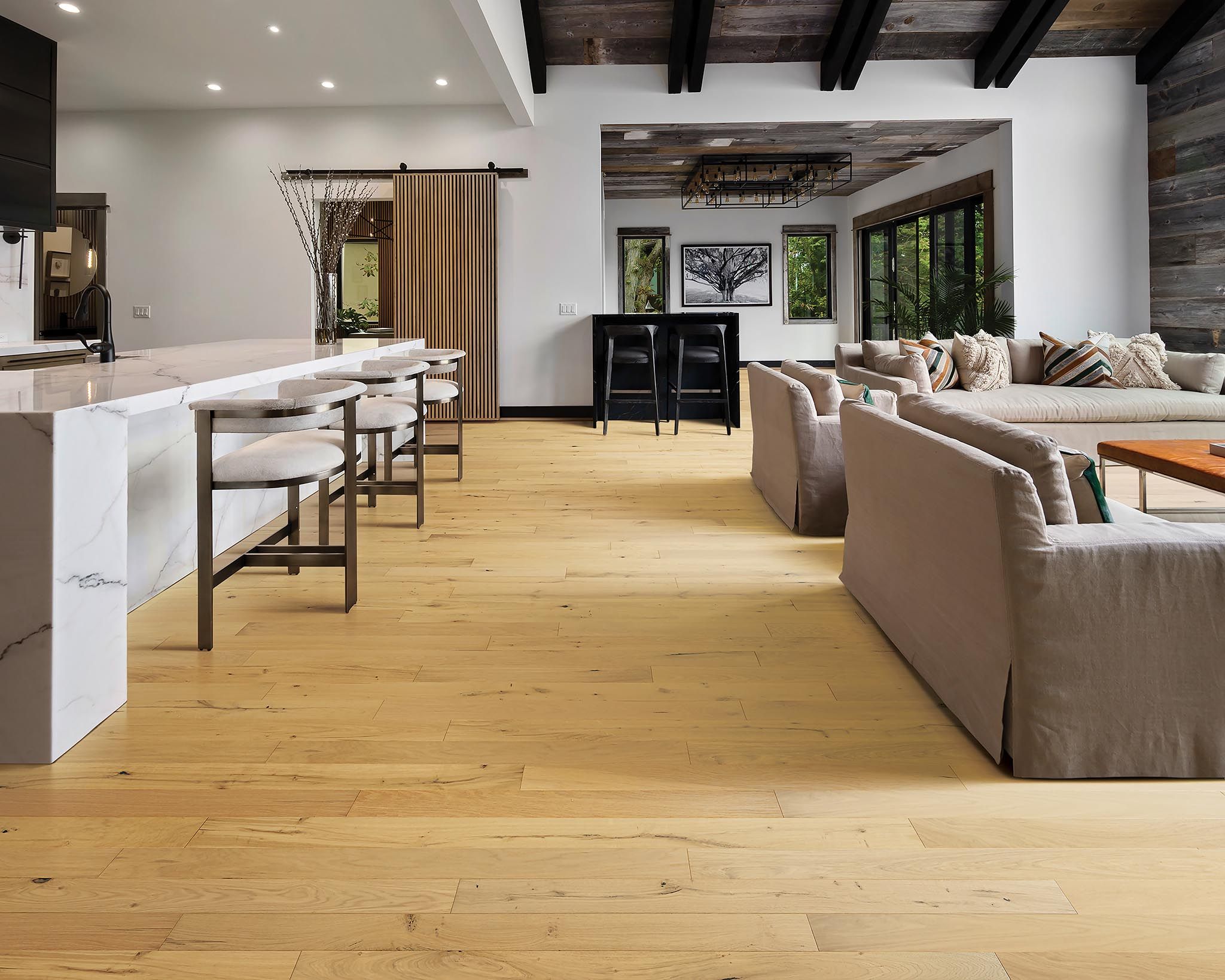
Engineered hardwood is a popular choice for homeowners who want the natural beauty of real wood while getting additional dimensional stability.
Unlike solid hardwood, engineered flooring is constructed with multiple layers, with a genuine hardwood surface on top. This construction can make it a practical option for many DFW homes, particularly those built over concrete slabs.
Engineered hardwood flooring DFW homeowners choose is often used in living rooms, bedrooms, dining areas, and open-concept spaces where appearance is a major priority.
It is not waterproof, so it still requires care around spills and moisture. However, when the right product is paired with proper moisture testing, acclimation, and installation, engineered hardwood can provide the upscale appearance many homeowners want.
Solid Hardwood
Solid hardwood remains one of the most timeless flooring choices available. It offers natural beauty, a substantial feel underfoot, and the ability to be sanded and refinished multiple times.
However, it requires more consideration in North Texas.
Solid wood naturally expands and contracts as humidity changes. Because many DFW homes are built on concrete slabs, installation requirements can also be more complicated than they are in homes with traditional wood subfloors.
For homeowners considering hardwood flooring in Dallas, the foundation and installation method should be evaluated before selecting the material.
Luxury Vinyl Plank
Luxury vinyl plank, or LVP, has become one of the most practical flooring choices for busy DFW households.
It is available in a wide range of wood-look designs and can handle everyday spills, pets, kids, and heavy foot traffic. Many products are also waterproof, making them particularly useful in areas where moisture is a concern.
LVP can also be more affordable than many hardwood options, making it attractive to homeowners who want a stylish floor without the higher cost and maintenance requirements of real wood.
Porcelain Tile
Porcelain tile is another strong option for North Texas homes, especially in bathrooms, kitchens, entryways, and other areas where moisture resistance matters.

It is extremely durable, easy to clean, and highly resistant to water. It also handles temperature changes well.
The main consideration is comfort. Tile is harder and colder underfoot than wood or vinyl, and improper installation over a moving or poorly prepared slab can contribute to cracking.
Flooring by Room
Different rooms have different flooring needs.
Living rooms: Engineered hardwood, LVP, solid hardwood, and porcelain tile can all work depending on your priorities. If you want warmth and a high-end appearance, real wood is hard to beat. If durability and easy maintenance are more important, LVP is worth considering.
Bathrooms: Porcelain tile and waterproof LVP are popular choices because they handle moisture better than traditional hardwood.
Bedrooms: Comfort becomes more important. Carpet, engineered hardwood, and LVP can all work depending on the look and feel you want.
Kitchens: Consider moisture resistance, cleaning, and durability. LVP, porcelain tile, engineered hardwood, and quality waterproof laminate can all be considered.
Entryways: These areas experience heavy traffic and often bring in dirt and moisture from outside. Durable tile, LVP, and properly finished hardwood can all be good options.
Why Your Concrete Slab Matters in DFW
One of the biggest things homeowners overlook when choosing flooring is what is underneath it.
Many DFW homes are built over concrete slabs, and North Texas also has expansive clay soil. Changes in moisture can cause the soil to expand and contract, while moisture within the concrete can affect certain flooring materials.
That does not mean flooring will automatically fail. It means preparation matters.
Before installation, your flooring professional may need to check:
- Concrete moisture levels
- Slab flatness
- High and low areas
- Existing cracks
- Required expansion space
- Appropriate underlayment or moisture protection
These steps can make a major difference in how the finished floor performs.
Don’t Choose Flooring Based on Appearance Alone
A flooring sample can look perfect in a showroom and still be the wrong choice for your home.
Think about what happens after installation. Will the floor need to handle two dogs running through the house? Will it be exposed to water every day? Is the room directly over a concrete slab? Do you want something that can be refinished years from now?
These questions are just as important as color and design.
The best flooring choice is the one that balances appearance, durability, maintenance, budget, and the conditions of your home.
Find the Right Flooring for Your DFW Home

There is no single flooring material that works perfectly for every Dallas–Fort Worth homeowner. Engineered hardwood may be ideal for someone looking for authentic wood and a refined appearance, while another homeowner may prefer waterproof LVP for its practicality. Porcelain tile may make more sense for a bathroom or high-moisture area.
That is why Flooring Guide DFW focuses on helping homeowners compare their options before making a decision.
Whether you are researching flooring in Dallas, comparing hardwood and LVP, looking into hardwood flooring in Dallas, or trying to understand which engineered hardwood flooring DFW homes can handle best, start with the conditions of your home—not just the latest trend.
The right floor should look good on installation day and continue to work for your home for years to come.
Frequently Asked Questions
What is the best flooring for DFW homes?
The best flooring depends on your room, lifestyle, budget, and home conditions. Engineered hardwood, LVP, and porcelain tile are popular choices.
Is engineered hardwood a good choice for DFW homes?
Yes. Engineered hardwood offers the look of real wood with greater dimensional stability, making it a practical option for many DFW homes.
Is hardwood flooring suitable for Dallas homes?
Yes, but humidity, moisture, and concrete slab conditions should be considered before installation. Proper preparation and installation are important.
What flooring is best for bathrooms?
Porcelain tile and waterproof LVP are strong options because they handle moisture better than traditional hardwood.
Does a concrete slab affect flooring installation?
Yes. Moisture levels, slab flatness, cracks, and movement should be checked before installing new flooring over concrete.