
Vinyl Flooring Care Guide (DFW Homes)
Why the Right Vinyl product and Installation Matter

Not all vinyl flooring is the same, and this is where a lot of homeowners get tripped up.
Some products are built to handle heavy traffic, pets, and daily wear. Others look similar at first but don’t hold up the same over time. The thickness, wear layer, and overall construction all play a big role in how your floors perform.
And just as important as the product is how it’s installed.
If the floor isn’t installed correctly, you can run into issues like movement, gaps, or premature wear, no matter how good the material is. A proper install makes sure everything is locked in, flat, and built to last.
That’s why it’s worth getting it done right the first time instead of going with the cheapest option.
First Things First (Right After Installation)
Once your new vinyl floors are installed, give them a little time to settle in before doing any cleaning. Try to avoid mopping or using any cleaners for the first 24 hours.
After that, you’re good to go.

Everyday Care (Keep It Simple)
Vinyl flooring is one of the easiest floors to live with, which is a big reason people choose it.
For day-to-day care:
- Sweep or vacuum regularly to remove dirt and grit
- Use a vacuum without a beater bar to avoid scuffing
- Mop lightly with warm water or a vinyl-safe cleaner
- Stick to pH-neutral, non-abrasive cleaners
You don’t need to overdo it—most of the time, a damp mop is all it takes.
A Few Habits That Make a Big Difference 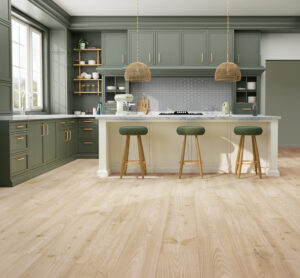
These small things go a long way in keeping your floors looking new:
- Wipe up spills sooner rather than later
- Use entry mats to catch dirt and moisture
- Add felt pads under furniture legs
- Lift furniture instead of dragging it
- Close blinds or curtains in rooms with strong sunlight
- Move rugs or furniture occasionally to avoid uneven fading
What to Avoid
A lot of flooring issues come down to using the wrong products or tools. Here are the big ones to stay away from:
- No steam mops
- No harsh chemicals or abrasive cleaners
- No “mop-and-shine” or wax products
- Don’t flood the floor with water
- Don’t drag heavy furniture or appliances
- Avoid rubber or latex-backed mats directly on the floor (they can discolor it over time)
Vinyl floors don’t need waxing or coatings—adding those can actually damage the surface.

Dealing with Spills and Messes
Most everyday messes are easy to clean with a vinyl-safe cleaner and a soft cloth or mop.
For tougher spots:
-Sticky messes: gently lift what you can, then clean the area
-Scuffs: rub lightly with your fingers or a soft cloths
-Stubborn marks: a small amount of rubbing alcohol usually does the trick
For things like paint or heavier residue, it’s best to go slow and avoid anything sharp that could scratch the floor.
If you’re ever unsure, it’s better to stop and check than risk damaging the surface.
Furniture, Weight, and Long-Term Wear
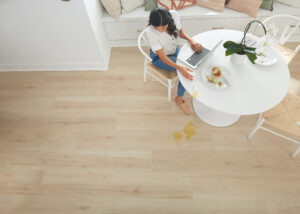
Vinyl is durable, but like any floor, it can show wear if it’s not protected.
- Use wide furniture protectors to prevent dents
- Avoid sharp or narrow legs (they can leave marks over time)
- Be careful with heavy appliances—use sliders or lift when possible
- Rearranging furniture occasionally helps prevent uneven wear
Climate Matters (Especially in DFW)
With North Texas weather, your home’s temperature and humidity can shift quite a bit.
Try to keep your home in a steady range when possible. Big swings in temperature or humidity can cause flooring to expand or contract over time.