
Why Tile
Porcelain and ceramic tile are popular in DFW because they’re resilient, long-lasting, and handle heat, water, and daily wear better than most flooring options.
They’re made from natural materials and fired at very high temperatures, which is what gives them that durability. Once installed, they’re one of the lowest-maintenance floors you can have.
That said, choosing the right tile up front makes a big difference in how it looks and holds up over time.
Choosing the Right Tile (This Matters More Than You Think)

A lot of people focus on color and pattern, which makes sense, but finish and texture matter just as much.
- Glossy tile looks sharp and clean, but it can show scratches and smudges more easily
- Matte or textured tile tends to hide wear better and is usually a safer choice for floors, especially in busy homes
This is where working with someone experienced helps. The right recommendation isn’t just about what looks good on a sample, it’s about how that tile is going to perform in your kitchen, bathroom, or entryway every day.
A Quick Note on Variation
A little tile variation is normal.
You might notice slight differences in color or texture from piece to piece. That’s part of the look, especially with anything designed to feel natural or stone-like. Once it’s installed, those variations are what give the floor character instead of making it look flat or uniform.
Day-to-Day Care (Easy to maintain)

Tile is one of the easier floors to maintain.
- Sweep or vacuum regularly to get rid of dirt and grit
- Mop as needed with a mild cleaner and water
- Rinse with clean water so you don’t leave residue behind
- Drying with a towel or microfiber mop helps avoid streaks, especially on darker tile
For most homes, that’s all it takes.
Porcelain-Specific Tips
Porcelain is dense and durable, but the finish still matters:
- Matte or textured porcelain can hold onto dirt a little more, so occasional deeper cleaning helps
- Polished porcelain doesn’t usually need sealing, but it does better with gentle, non-abrasive cleaners
If you’re ever unsure what to use, it’s better to keep it simple than go too aggressive.
Don’t Forget About the Grout
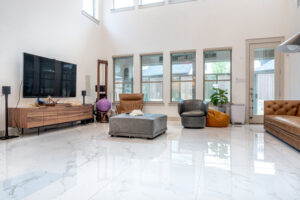
Most of the time, when people think their tile looks “dirty,” it’s actually the grout.
Grout is more porous than tile and can darken over time, especially in high-use or wet areas like kitchens and showers.
- Sealing grout helps protect it from stains and moisture
- Some newer grout products don’t require sealing, but it depends on what was used
- In showers and wet areas, it’s worth checking caulking and sealing occasionally to prevent bigger issues later
Keeping grout clean makes a bigger difference than people expect.
Handling Spills and Stains
For everyday messes, a basic tile-safe cleaner is usually enough.
For tougher spots:
- Let the cleaner sit for a few minutes before scrubbing
- Use a soft brush or pad—no need to go aggressive
- Rinse well so nothing gets left behind
If you’re dealing with something stubborn, test any stronger cleaner in a small area first, especially on polished tile.
Bathrooms & Showers (DFW Reality)
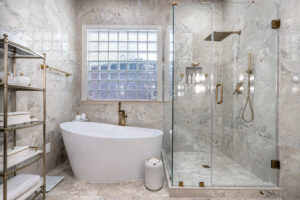
In bathrooms, a little routine care goes a long way:
Wiping down shower walls every so often helps prevent buildup from soap and water. If you’ve got hard water (which is common in North Texas), you may notice mineral spots over time. A mild cleaner or a simple vinegar-water mix can help, but always test it first.
The goal is to stay ahead of buildup so it doesn’t turn into something harder to remove later.
What to Avoid
Most issues with tile come from using the wrong products, not the tile itself:
- Avoid harsh or highly abrasive cleaners on polished surfaces
- Be careful with strong scrubbing powders—they can dull the finish
- Don’t let residue from cleaners sit on the surface
When in doubt, simpler is better.
Sealing (When It’s Needed)
Glazed tile itself usually doesn’t need sealing—but grout often does.
There are different types of sealers depending on the material, and this is another area where getting the right advice upfront helps. Using the wrong product (or skipping it when it’s needed) can affect how your floors age over time.