Return on Investment- DFW Resale Value
If you live in the Dallas–Fort Worth Metroplex, choosing the right flooring isn’t just about style—it’s about handling heat, humidity swings, and everyday wear. You also have to make sure that the material fits the needs of each room and adds resale value to your home. Understanding which flooring adds resale value Dallas buyers actually notice starts with looking at real cost-recovery data, buyer preferences, and installation requirements—not just showroom appeal.
According to the 2022 NAR/NARI Remodeling Impact Report, hardwood flooring remains one of the strongest interior remodeling investments. Hardwood refinishing can achieve approximately 147% cost recovery, while new hardwood installation can reach about 118% cost recovery. Recent real estate research also indicates that homes featuring real hardwood floors can command approximately a 2.5% to 5% sales-price premium and may sell faster than homes with carpet or aging flooring surfaces.
| Material | Engineered Hardwood | Solid Hardwood | Laminate | LVP (Vinyl) | Porcelain Tile |
| Resale Value | ★★★★★ | ★★★★★ | ★★★☆☆ | ★★★☆☆ | ★★★★☆ |
Which Flooring Adds Resale Value Dallas Homeowners See Most: Hardwood’s ROI Advantage

In the Dallas- Fort Worth housing market, flooring is one of those upgrades that quietly influences everything, how fast a home sells, how buyers feel walking through it, and what they’re willing to pay. It’s not just about looks. In North Texas, where heat, humidity swings, and slab foundations are common, the right flooring choice can directly impact both resale appeal and long-term performance.
The cost-recovery data is especially strong for real hardwood. The NAR/NARI Remodeling Impact Report identifies hardwood refinishing as one of the strongest interior remodeling projects, with approximately 147% cost recovery, while new hardwood flooring installation reaches approximately 118% cost recovery. These figures help explain why real hardwood continues to stand out when homeowners are looking for an upgrade that combines appearance with resale potential.
Real estate research from Opendoor and Zillow also points to a buyer preference for genuine hardwood. Homes with real hardwood floors can command approximately a 2.5% to 5% sales-price premium and may attract buyers more quickly than homes with carpet or visibly aging flooring. The actual premium will vary by property, neighborhood, condition, and overall market conditions, but the broader trend is clear: buyers recognize the value of well-maintained real wood.
Engineered Wood: The DFW Standard for High-End Homes
In many Dallas–Fort Worth homes today, engineered hardwood is what buyers expect to see in main living areas and, when properly installed, it can support both premium design and resale appeal.
The biggest shift in recent years isn’t just about durability, its design. In neighborhoods like Frisco, Prosper, Celina, and Southlake, “high-end” flooring now often means wide-plank engineered wood in the 7″ to 9″ range. That look is much better suited to a concrete slab when the flooring system is properly selected and installed. Engineered multi-ply construction provides dimensional stability that makes it a practical choice for DFW homes built over ground-level concrete slabs.
That matters because wide-plank flooring responds more noticeably to changes in moisture and humidity. The National Wood Flooring Association’s installation guidance emphasizes proper subfloor moisture testing and the use of appropriate engineered construction where slab conditions require additional dimensional stability. In DFW, the concrete slab underneath the flooring is part of the installation equation—not something that can simply be ignored.
And that matters more than most people realize. Buyers don’t just notice the floor—they notice the scale of the floor. Wide planks make open-concept homes feel more expensive, more current, and more intentional.
Engineered hardwood also performs well in real North Texas conditions, but it still requires respect. Moisture is the main factor. If a dishwasher leaks or a fridge line drips, wood will react over time. That’s just reality. More importantly, moisture coming through a concrete slab can create problems if the subfloor is not properly tested and prepared before installation.
For concrete slabs, moisture testing should be completed before installation. ASTM F2170 provides an in-situ relative humidity testing method for concrete slabs, while ASTM F1869 provides a moisture vapor emission rate testing method. The client reference identifies a maximum 75% in-slab RH threshold as an important benchmark for preventing moisture-related failures beneath luxury wide-plank flooring.
Where it works best in DFW homes:
- Living rooms
- Primary bedrooms
- Dining areas
- Home offices
It delivers the look buyers want without forcing you to ignore the concrete slab underneath it. Proper moisture testing, acclimation, installation methods, and climate control are what help wide-plank engineered flooring perform as intended.
Solid Hardwood: Premium Feel, Higher Sensitivity
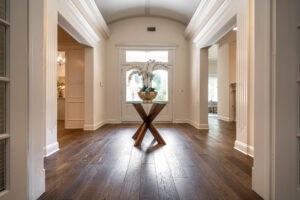 Solid hardwood is still one of the most respected flooring choices in North Texas, especially in older or higher-end custom homes. It has weight to it, visually and physically, that engineered wood tries to replicate but never fully matches.
It also remains the only option that can be sanded and refinished multiple times, which is one reason refinishing can deliver such strong cost recovery. The NAR/NARI Remodeling Impact Report places hardwood refinishing at approximately 147% cost recovery, making restoration of existing hardwood particularly attractive when the underlying floor is still in good condition.
That said, solid wood is more sensitive to how a home behaves throughout the year. In the Dallas–Fort Worth climate, humidity control matters more than most homeowners expect.
NWFA moisture guidance recommends maintaining indoor relative humidity within a controlled range to reduce seasonal movement. A practical target is generally around 30% to 50%, with guidance also commonly expressed as approximately 35% to 55%. Indoor temperatures around 60°F to 80°F also help maintain more stable conditions for wood flooring.
If humidity drops too low, boards can lose moisture and gaps may develop. If humidity rises too high, especially during North Texas’s humid seasons, wood can absorb moisture and become more susceptible to cupping, swelling, and other movement. Consistent HVAC operation and appropriate residential dehumidification can help control these seasonal changes.
So yes—solid wood is beautiful, but it performs best in homes where climate control is consistent and maintenance is part of the lifestyle.
Quick Reality Check: What Buyers Actually Respond To
In real DFW resale situations, buyers tend to respond in a predictable way:
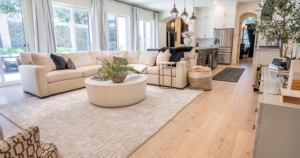
- Highest emotional impact: Real hardwood (solid or engineered)
- Strong practical appeal: LVP in secondary or wet areas
- Budget-friendly improvement: Laminate over old carpet
- Durability-first spaces: Porcelain tile
The key difference is simple: wood sells the feeling of “upgraded home,” while other materials often sell functionality.
That’s why real hardwood continues to attract attention in main living areas across Dallas, Plano, McKinney, and other DFW markets. Buyers are not only evaluating how a floor looks today—they are also considering durability, maintenance, and the perceived quality of the home.
Final Thought
In North Texas, flooring isn’t just a design decision, it’s a climate decision and a resale strategy at the same time.
Engineered hardwood dominates many high-end DFW homes because it delivers wide-plank design with the dimensional stability needed for properly prepared slab foundations. Solid hardwood still leads in long-term prestige and refinishing value. And everything else fills a role, but rarely replaces the emotional impact of real wood when buyers walk through the door. If you’re weighing which flooring adds resale value Dallas wide, the available cost-recovery and market data consistently point back to real hardwood, solid or engineered.
The numbers are particularly compelling when existing hardwood can be refinished rather than completely replaced. With approximately 147% cost recovery reported for hardwood refinishing and approximately 118% for new hardwood installation, the right project can become more than a cosmetic improvement—it can be a strategic investment in the home’s perceived and potential market value.
If you choose correctly for your home type, your climate, and your neighborhood, flooring stops being an expense and becomes one of the more valuable interior improvements you can make in Dallas-Fort Worth real estate.
Expert Tip:
In DFW, installation quality matters as much as the wood itself. Before installing premium wide-plank hardwood over a concrete slab, make sure the slab has been properly moisture tested and that the flooring system is appropriate for the site’s moisture conditions. ASTM moisture testing and NWFA installation guidance can help identify conditions that could otherwise lead to flooring movement or failure.
Not Sure What Your Home Needs?
If you’re not sure which flooring best fits your resale goals and lifestyle needs, book a free consultation and we’ll help guide you toward the right flooring solution for your home.
Frequently Asked Questions
1. Which flooring adds the most resale value in Dallas?
If you’re wondering which flooring adds the most resale value in Dallas, engineered hardwood and solid hardwood are among the strongest choices for buyer appeal and long-term value. The NAR/NARI Remodeling Impact Report reports approximately 118% cost recovery for new hardwood installation and approximately 147% for hardwood refinishing.
2. Does hardwood flooring increase a home’s resale value?
Yes. Real hardwood is highly valued by many homebuyers because it combines timeless appearance, durability, and long-term usability. Client-provided real estate research indicates that homes with real hardwood floors can command approximately a 2.5% to 5% sales-price premium and may sell faster than homes with carpet or aging flooring, although the actual result varies by property and market.
3. Is Luxury Vinyl Plank a good investment for resale?
Yes. High-quality Luxury Vinyl Plank (LVP) provides excellent durability, waterproof performance, and a modern appearance that attracts many buyers. It can be a practical choice for secondary areas, wet spaces, and homes where durability and maintenance are higher priorities than the premium resale appeal associated with real hardwood.
4. Which rooms have the biggest impact on flooring resale value?
Living rooms, kitchens, dining rooms, and primary bedrooms often have the greatest influence on buyers and can improve your home’s overall appeal. Real hardwood tends to have the strongest visual and emotional impact when used across connected main living spaces.
5. How do I choose flooring that improves resale value?
Choose flooring that complements your home’s style, fits your budget, and offers durability with low maintenance. In DFW, also consider the home’s concrete slab, moisture conditions, indoor humidity, and HVAC performance. For hardwood installations, proper slab moisture testing and installation practices are essential to long-term performance.