
If you’re building, remodeling, or upgrading your home in the Dallas- Fort Worth area, your staircase is more than just a way to get upstairs, it’s a design centerpiece. The right staircase can elevate your home’s style, improve functionality, and even increase resale value.
In this guide, we’ll walk through the most popular staircase flooring ideas DFW homeowners are choosing right now, along with practical insights on space, cost, and design trends in North Texas homes.
Stairs take more wear and tear than just about anything else in the house, and with how homes shift in North Texas, you need something that’s not just good-looking on install day, but still solid years later.
Staircase Flooring Ideas DFW: Choosing the Right Staircase for Your Home
#1 Solid Wood Staircase (Best Overall)
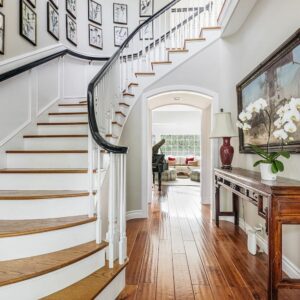
If the budget allows for it, this is where most experienced installers will point you, every time.
Solid wood just belongs on stairs. A full 1-inch tread in white oak or red oak feels completely different under your foot compared to anything. There’s weight to it. No hollow sound, no flex, no seams at the front edge waiting to fail five years down the line.
And the nose, that front lip of the step, matters more than people think. It takes the brunt of every step. With solid wood, it’s all one piece. Nothing glued on, nothing separating later.
Where this really wins in DFW homes is the finish. You can match your floors almost dead-on. When it’s done right, the staircase doesn’t look like a project, it just looks like it was always part of the house.
And resale? Buyers notice. They might not know why it feels better, but they feel it.
Honestly, if you’re already investing in a renovation and you can afford solid wood, it’s hard to make a case for anything else on your main staircase.
#2 Engineered Wood Staircase (Good, but know what you’re getting)
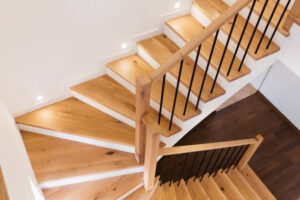
If you’re worried about movement from humidity or inconsistent AC use, it can be a safer option than solid wood.
But here’s where people get tripped up: most engineered stair setups are caps. They go over your existing steps. That’s not necessarily bad, but it’s not the same thing as a full solid tread either.
Some are built well. Some aren’t.
The biggest thing to watch is the nosing. If that front edge is just a separate piece glued on, that’s a weak point, plain and simple. Over time, with enough traffic, it can start to separate or feel loose.
If you go engineered, go with a product where the nose is part of the tread itself. And don’t cheap out on the install, it makes a bigger difference here than people expect.
#3 (Practical, but don’t cut corners)
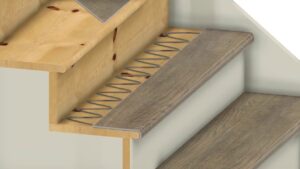
Vinyl is everywhere right now, especially in DFW, and for good reason. It handles water, dirt, dogs, kids, whatever you throw at it.
If your whole house is LVP, it makes sense to carry it onto the stairs. Just do it the right way.
You don’t want someone cutting up floor planks and trying to piece together a staircase. That’s where things start to look off fast. One piece stair treads are what you’re after.
And the nosing, same story as before, skip the overlap pieces that stick out over the edge. They look like an add-on because they are. They can also catch your foot if they start to loosen.
A flush, single-piece tread looks cleaner and holds up better. If you’re going vinyl, that’s the standard you want.
It’s not going to give you that high-end, custom feel like wood, but for a busy household, it’s hard to beat from a maintenance standpoint.
#4 Laminate Treads (Let’s be real about it)
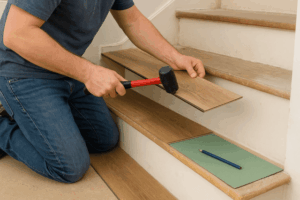
Laminate has gotten better. No argument there. It’s tough, it resists scratches, and if you’ve got big dogs running up and down the stairs all day, it’ll probably hold up better than softer woods.
But for a main staircase? This is usually where people are trying to save money, and it shows.
You can’t refinish it. Once it starts wearing, that’s it. And visually, it just doesn’t have the depth or character of real wood.
If it’s a secondary staircase, a rental, or you just need something functional on a tighter budget, fine, it’ll do the job.
But if this is the first thing people see when they walk into your home, most pros would tell you the same thing: don’t build your focal point around laminate if you have another option.
Why Staircase Design Matters in DFW Homes 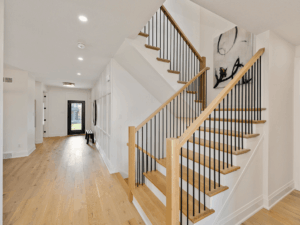
In DFW homes, open floor plans, soaring ceilings, and a blend of modern and traditional architecture are defining design features. Because of this, staircases often become a central focal point, frequently positioned in highly visible areas such as entryways, living rooms, or open-concept gathering spaces.
A well-designed staircase does far more than connect levels in your home. In Dallas–Fort Worth homes, the right staircase design can enhance natural light flow, create a stronger sense of openness, and help maximize usable square footage. It also plays a key role in complementing your home’s architectural style, whether your space leans contemporary, transitional, or classic North Texas design.
Beyond aesthetics, an upgraded staircase can significantly increase property appeal for future buyers in the competitive DFW real estate market. Thoughtful staircase design adds both functionality and visual impact, making it one of the most valuable architectural features in a North Texas home. For homeowners in Dallas, Fort Worth, and surrounding DFW communities, exploring the right staircase flooring ideas DFW design trends support can elevate both daily living and long-term resale value.
Expert Tip
Ultimately, your staircase is one of the most impactful design features in your home. Whether you’re aiming for a bold architectural statement or a practical, space-efficient solution, the best choice depends on your layout, budget, and how you live day to day.
Most homeowners around here who plan to stay, or who care about resale, end up going with solid wood. It’s the cleanest look, the most durable long-term, and it ties the house together better than anything else.
Engineered can work if you’re careful about the product and install. Vinyl is great for low maintenance. Laminate has its place, but it’s not usually on a showcase staircase.
At the end of the day, it’s not just about what looks good right now. It’s about what still feels solid after a few years of real, everyday use.
| Material | Durability (Pets/Kids) | Style Match | Resale Value | Expert Verdict |
| Solid Wood | ★★★☆☆ | ★★★★★ | ★★★★★ | Best for “high-end Homes” and best ROI. |
| Engineered | ★★★★☆ | ★★★★★ | ★★★★☆ | Best for climate stability and matching floors. |
| Vinyl (LVP) | ★★★★★ | ★★★☆☆ | ★★★☆☆ | Best for an active household and waterproof. |
| Laminate | ★★★★★ | ★★★☆☆ | ★★☆☆☆ | Best for scratch resistance on a budget |