
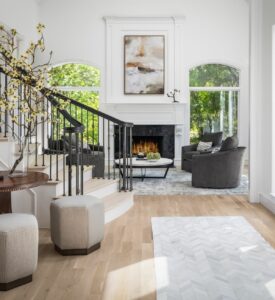
 Everything North Texas homeowners need to know before installing hardwood flooring from choosing the right material to making sure it lasts in the DFW climate.
This guide is based on real installation conditions across Dallas, Tarrant, Denton, and Collin counties, not showroom theory or generic national advice.
Hardwood flooring remains one of the most valuable upgrades for homes in Dallas–Fort Worth. It adds warmth, resale appeal, and works across nearly every design style, from traditional homes in Lakewood to modern builds in Frisco and Prosper.
But in North Texas, hardwood performance depends heavily on what’s happening underneath the floor.
Expansive clay soil, slab moisture, seasonal humidity swings, and installation quality all play a bigger role here than most homeowners realize.
That’s why the same floor can last 25 years in one home… and begin failing within a few seasons in another.
Why Hardwood Flooring Behaves Differently in DFW
Most North Texas homes sit on expansive Blackland Prairie clay soil.
That soil expands during wet periods and contracts during dry Texas summers. Even though the movement is gradual, it never completely stops.
In newer suburbs like Frisco, Prosper, Celina, and parts of Plano, slab moisture is one of the most common long-term flooring problems.
In older Dallas neighborhoods like Lakewood, East Dallas, and parts of Irving, structural flex and uneven subfloors become more common instead.
Same hardwood. A completely different environment underneath it.
That’s why hardwood flooring in DFW is less about trends and more about stability, moisture control, and installation quality.
Solid Hardwood: Beautiful, Designer Choice in DFW
Solid hardwood is exactly what it sounds like — one full piece of wood from top to bottom.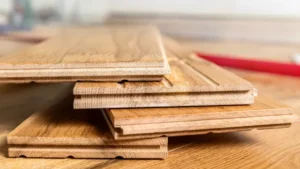
Homeowners still love it because it offers:
- A natural, dense feel underfoot
- Long lifespan
- Multiple refinishing opportunities
- Timeless appearance that ages well
When installed in the right environment, solid hardwood is hard to beat visually.
But in North Texas, it has limitations.
Solid wood naturally expands and contracts with humidity changes. In DFW homes sitting on active slab foundations, that movement becomes more aggressive over time.
Where Solid Hardwood Performs Best
- Pier-and-beam homes
- Upstairs installations
- Homes with controlled indoor humidity
- Smaller rooms with stable conditions
Where Solid Hardwood Struggles
- Direct slab installations
- Kitchens and laundry rooms
- Homes with major seasonal humidity swings
- Wide-open floorplans with large spans
Engineered Hardwood: The Real DFW Standard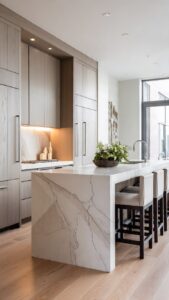
Engineered hardwood has become the most successful long-term option for many North Texas homes.
Instead of one solid piece of wood, engineered flooring uses a real hardwood surface layered over a more stable core structure.
That added stability matters in DFW.
It helps reduce movement caused by:
- slab moisture
- humidity fluctuations
- seasonal expansion and contraction
But homeowners should understand something important: Engineered hardwood is moisture-resistant not moisture-proof.
The flooring issues we see most often are rarely dramatic floods. They’re smaller moisture problems that build slowly over time:
- Dishwasher leaks that go unnoticed
- Pet accidents trapped beneath rugs
- Moisture intrusion near exterior doors
- Humid summer air entering through poorly sealed entries
Where Engineered Hardwood Works Best
- Living rooms
- Bedrooms
- Dining areas
- Offices
- Open-concept layouts
- Slab foundation homes
Areas That Still Need Extra Caution
- Kitchens
- Laundry rooms
- Mudrooms
- High-moisture entryways
The Slab Moisture Problem Most Homeowners Never See
Concrete may look dry on the surface while still holding significant internal moisture underneath.
That moisture slowly migrates upward through the slab over time.
When hardwood is installed without proper moisture testing or vapor protection, the results usually appear months later:
- Hollow sounds
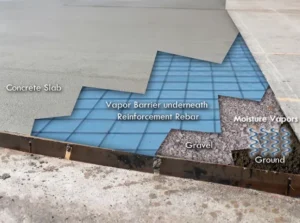
- Adhesive failure
- Board movement
- Soft spots
- Uneven wear patterns
Many homeowners assume the flooring material failed. In reality, most failures begin underneath the floor long before visible symptoms appear.
A proper hardwood installation in DFW should always include:
- Concrete moisture testing
- Vapor barrier evaluation
- Subfloor leveling
- Expansion planning
- Climate acclimation before installation
Why Acclimation Matters More in Texas
One of the most skipped steps in rushed flooring jobs is acclimation.
Hardwood needs time to adjust to your home’s real indoor environment before installation begins.
In North Texas, HVAC conditions vary dramatically between homes, especially during summer and winter transition months.
We require a minimum of 7 days for wood to acclimate to the home’s specific HVAC environment before installation begins.
Anyone promising a “next-day hardwood install” is gambling with the long-term stability of the floor.
Proper acclimation helps reduce:
- excessive expansion
- shrinking
- peaking
- seasonal gaps
- movement stress after installation
This is especially important in newer construction homes where interior moisture levels may still be elevated.
What We Actually See in DFW Homes
After inspecting homes across Dallas, Southlake, Plano, Prosper, Arlington, and McKinney, a few patterns consistently show up.
Slab Moisture in Newer Homes
Many newer slab homes retain more moisture than homeowners expect.
Without proper testing beforehand, problems often appear later as:
- adhesive breakdown
- soft spots
- loose boards
- irregular movement
Soil Movement Across North Texas
The clay soil underneath DFW homes constantly shifts with weather cycles.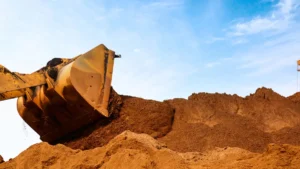
You may notice:
- subtle seasonal gaps
- slight floor movement in larger rooms
- changes in how stable floors feel throughout the year
This is one reason installation quality matters so much more here than in other regions.
Poor Subfloor Preparation
This is one of the biggest hidden causes of flooring complaints.
If slabs are not leveled correctly: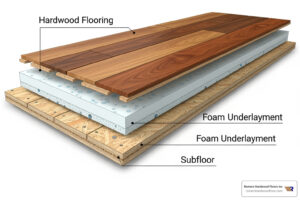
- boards may sound hollow
- edges may sit unevenly
- wear patterns develop faster
- movement becomes more noticeable
Most of the time, this is not a wood problem. It’s an installation-prep problem.
Older Home Odor Problems Most Installers Ignore
In older homes throughout Dallas, Garland, Irving, and parts of Richardson, old carpet padding and untreated subfloors often hold years of trapped odors.
During humid North Texas summers, those odors can reactivate after new flooring is installed.
That’s why subfloor treatment matters before hardwood ever goes down.
In homes with previous pet damage, moisture exposure, or long-term carpet installation, we recommend sealing the subfloor with an antimicrobial primer designed to lock in odor contamination before installation begins.
If this step gets skipped, heat and humidity can gradually pull those odors back into the home later.
Most homeowners never hear about this until after the flooring is already installed. That’s why it’s important to hire professional experts that care about the details.
What Hardwood Actually Feels Like Day-to-Day
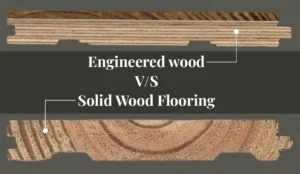
In real-world use, the differences between solid and engineered hardwood are smaller than many people expect.
Solid hardwood tends to feel:
- denser
- more grounded
- slightly more traditional underfoot
Engineered hardwood varies more depending on:
- core construction
- plank thickness
- installation method
One thing we consistently notice in DFW homes:
Real wood generally feels more stable and substantial underfoot over time, while many LVP floors feel softer and slightly more temperature-sensitive during colder months.
How to Keep Hardwood Looking Good in DFW
Long-term hardwood performance in North Texas comes down to consistency.
Not perfection. The homeowners who get the longest lifespan from their floors usually follow a few simple habits year after year.
The Most Important Maintenance Rules
- Keep indoor humidity between 35–55%
- Use felt pads under furniture
- Sweep regularly to remove grit
- Clean spills immediately
- Use rugs near entrances and high-traffic paths
- Avoid allowing standing moisture to sit on the floor
What Actually Wears Hardwood Down in DFW
Most wear is not caused by foot traffic alone.
The biggest long-term causes are:
- fine exterior grit
- pet claws combined with dirt
- prolonged sun exposure
- unnoticed moisture events
What We See Long-Term
Floors that are maintained consistently often remain beautiful for 10–20+ years before major refinishing is needed.
Light recoating every few years can dramatically extend the life of the finish.
Most “aging problems” in DFW hardwood are not sudden failures.
They’re slow signs of:
- humidity imbalance
- grit abrasion
- moisture neglect
- deferred maintenance
Hardwood rarely fails randomly in North Texas.
It usually reflects the environment it lived in.
Installation Quality Is the Real Difference
Material matters. Installation matters more.
A proper hardwood installation in DFW should always include:
- Moisture testing before installation
- Floor acclimation inside the home
- Subfloor leveling
- Expansion planning
- Vapor protection where needed
- Odor and contamination treatment when necessary
The difference between a floor lasting 5 years versus 20 years often starts before the first board is installed.
One Question Homeowners Should Always Ask
If you’re replacing carpet or remodeling an older home, ask this before hiring anyone:
“Do you address subfloor moisture and odor issues before installing hardwood?”
In North Texas, that answer tells you almost everything about the quality of the installer.
Hardwood Design Trends That Are Actually Holding Up in DFW
What’s Working
- White oak in natural and medium tones
- Wide planks (7”–9”) in open layouts
- Matte and low-sheen finishes
- Wire-brushed textures for durability
- Warmer natural wood tones
Trends Fading Fast
- High-gloss finishes
- Heavy gray-only flooring
- Extremely dark stain colors
- Narrow strip flooring in large modern spaces
Frequently Asked Questions About Hardwood Flooring in DFW
Is engineered hardwood better for Texas homes?
For most slab-foundation homes in North Texas, yes. Engineered hardwood generally handles humidity swings and slab movement more predictably than solid hardwood.
Can solid hardwood be installed on concrete slabs?
It can, but the environment should be carefully controlled.
How long does hardwood flooring last in North Texas?
With proper installation and maintenance, quality hardwood flooring can last 20+ years or longer.
What indoor humidity is best for hardwood floors?
Most hardwood manufacturers recommend maintaining indoor humidity between 35–55%.
What’s the biggest cause of hardwood floor failure in DFW?
Moisture issues underneath the floor, not the wood itself.
Final Take: What Actually Lasts in North Texas Homes
There is no single “best” hardwood floor for every home.
But there is a very clear pattern in what succeeds long-term in Dallas–Fort Worth.
The homes with the best long-term results usually get four things right:
- The flooring matches the foundation type
- Moisture risks are addressed before installation
- The subfloor is properly prepared
- Indoor humidity stays relatively consistent
When those four things are handled correctly, hardwood flooring doesn’t just look good when it’s installed. It continues performing years later in a climate that exposes shortcuts quickly.
Final Thoughts
Most hardwood problems in DFW do not begin with the material itself.
They begin underneath the floor:
- untested slab moisture
- rushed installations
- poor acclimation
- uneven subfloors
- humidity neglect
That’s the difference between a floor that simply gets installed… and one that actually lasts in North Texas.