
Hardwood floors are everywhere in Dallas- Fort Worth, and for good reason. They look right, they add value, and they hold up better long-term than most alternatives.
But here’s what most homeowners don’t hear upfront: hardwood in DFW is not plug-and-play.
Between slab foundations, shifting soil, and major humidity swings, what works in other parts of the country can quietly fail here over time.
This isn’t about what looks best on install day, it’s about what still looks good years later in a North Texas home. Making the right call on solid vs engineered hardwood DFW homes actually starts with understanding how each performs against local conditions.
Solid vs Engineered Hardwood DFW: Side-by-Side Reality
| Feature | Solid Hardwood | Engineered Hardwood |
| Construction | One solid piece of wood | Layered core with real wood top |
| Movement | Expands/contracts more | More stable with climate changes |
| Refinishing | Multiple times | Limited (depends on wear layer) |
| Install over concrete | Requires sleeper system or plywood build-up | Designed for it |
| Moisture resistance | Low | Moderate (not waterproof) |
Solid Hardwood (Where It Works—and Where It Doesn’t)
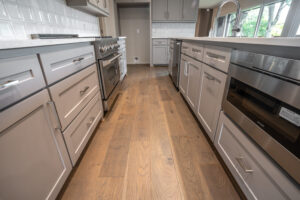
Solid hardwood is the traditional option. It’s a single piece of real wood, and when it’s installed in the right environment, it’s hard to beat.
It feels solid underfoot. It can be refinished multiple times. It adds long-term value.
But here’s the part that gets glossed over:
solid hardwood moves, and in North Texas, it moves more than most people expect.
You might see:
- Seasonal gaps during dry winters
- Expansion during humid months
- Minor cracks or height variation over time
That’s normal. That’s wood doing what wood does. It’s less about convenience and more about legacy.
Engineered Hardwood (Why it’s popular in DFW)
Engineered hardwood exists for a reason, and in Dallas–Fort Worth, it solves a lot of real problems.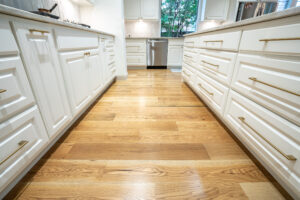
It’s still real wood on top. The difference is underneath: a layered core that handles movement better. That matters here. But let’s keep it honest: engineered hardwood is not waterproof. If water sits long enough, it will react.
Where engineered works best:
- Slab foundations
- Open-concept layouts
- Everyday family homes
Durability in DFW: It’s Not Just the Wood
Most people focus on species. In North Texas, the bigger issue is:
Dust, dirt, and fine debris act like sandpaper on your floors. That’s why finish matters just as much as material.
What actually holds up:
- Wire-brushed or lightly textured finishes
- Matte or satin sheen
What doesn’t age well:
- Smooth, high-gloss floors (they show everything fast)
If you’ve got dogs, this is simple: skip the glossy finish, you’ll regret it in a few months.
Janka Scale (What Actually Matters)
The Janka scale measures hardness, but here’s the real-world version:
- White oak / hickory → reliable, handles daily wear well
- Walnut / pine → softer, will show dents faster
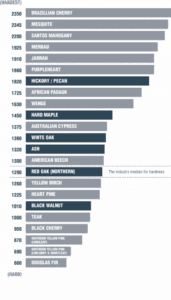
In a busy DFW household, harder species just make life easier.
The Part Most Installers Rush: Acclimation
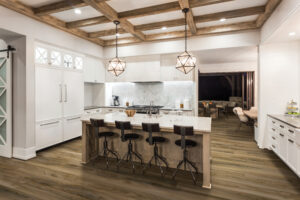 This is one of the biggest differences between a floor that lasts, and one that doesn’t.
In the Dallas-Fort Worth metroplex, indoor humidity can swing 20–30% in a single week, especially during seasonal transitions.
That movement directly affects wood. We require a minimum of 3–5 days of acclimation with HVAC running before installation.
If someone is offering “next-day install,” they’re skipping a step that matters long-term.
What Keeps Hardwood Looking Good for Years (DFW Reality)
Hardwood doesn’t fail randomly, it reflects how it’s lived on.
What actually works: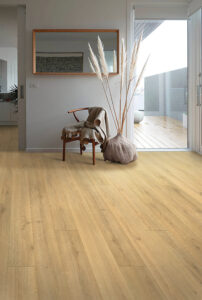
- Keep humidity between 35–55%
- Clean regularly (DFW dust builds fast)
- Use rugs in high-traffic areas
- Add felt pads under furniture
What causes wear here:
- Dirt + foot traffic
- Pet claws + grit
- Sun exposure in open layouts
- Small moisture issues over time
A well-maintained hardwood floor in DFW can look great for 10–20+ years.
Neglect those basics, and problems show up much sooner.
Installation Matters More Than the Product
In North Texas, flooring performance comes down to:
- Moisture testing
- Proper subfloor prep
- Acclimation
- Correct installation method
Skip those, and even premium hardwood won’t perform the way it should.
Final Take (What Will Actually Feel Right in Your Home)
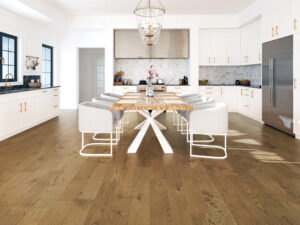 At some point, this decision stops being technical, and becomes personal. When it comes to solid vs engineered hardwood DFW homeowners choose between, both options can work in Dallas–Fort Worth when installed correctly.
The better question is: What do you want your home to feel like every day?
Choose solid hardwood if:
You’re going for a more traditional, long-term, “built-in” feel.
Solid wood has a weight to it, visually and physically. It fits naturally in older homes, classic interiors, and spaces where you want that timeless, established look. It’s also the only option that can truly be refinished over and over, which matters if you’re thinking 15–30 years ahead.
It’s less about convenience and more about legacy.
Choose engineered hardwood if:
You want a clean, high-end look that fits how most DFW homes are actually lived in.
Engineered gives you the same real wood surface, but with more flexibility in layout, installation, and day-to-day life. It works especially well in open-concept homes, modern designs, and spaces that see constant activity.
If your goal is something that looks great, feels current, and doesn’t require overthinking every detail—this is where most homeowners land.
One thing most people don’t think about:
finish matters more than the wood type once you’re living on it.
- Smooth + glossy → looks sharp at first, shows wear faster
- Wire-brushed + matte → looks natural, hides real life much better
That choice impacts your day-to-day experience more than solid vs engineered ever will.
Bottom Line: Solid vs Engineered Hardwood DFW Homeowners Can Rely On
The best hardwood floor in DFW isn’t just the one that fits your foundation, it’s the one that fits how you live, how you want your home to feel, and how much you want to think about your floors after they’re installed.
Get that right, and you won’t second-guess the decision later.
Not Sure What Your Home Needs?
If you don’t know whether your home is slab or pier-and-beam—or whether moisture is a concern.
Book a “ Free Expert Consultation.”
Experts will test moisture levels, evaluate your foundation, and tell you exactly what will (and won’t) work in your home before you spend a dollar on flooring.
Frequently Asked Questions
1. Which is better: solid vs engineered hardwood in DFW?
The best choice depends on your home’s foundation, lifestyle, and budget. This solid vs engineered hardwood DFW guide helps you compare both options with confidence.
2. Does solid hardwood last longer than engineered hardwood?
Solid hardwood can last for decades and be refinished multiple times, while engineered hardwood offers excellent durability with easier installation and stability.
3. Which hardwood flooring adds more resale value?
Both add resale value but solid hardwood adds more is often preferred in many DFW homes for its appearance, performance, and versatility.
4. How do I choose between solid and engineered hardwood?
Compare factors like moisture resistance, installation method, maintenance, and long-term goals to choose the flooring that best fits your home.